
Introduction
APIs are everywhere. They quietly power mobile apps, connect cloud services, integrate third-party platforms, and make modern software ecosystems possible. Whether you’re ordering food online, checking your bank balance, or syncing data between tools, APIs are working behind the scenes like invisible messengers. Because of this, building APIs isn’t just a technical task anymore—it’s a strategic responsibility.
API development has become a critical foundation of modern software architecture. From mobile applications to cloud platforms, effective API development ensures seamless communication between systems. When API development best practices are ignored, teams face performance bottlenecks, security risks, and integration failures. That’s why understanding API development from a strategic and technical perspective is no longer optional—it’s essential for building scalable, reliable, and future-proof digital products.
Poorly designed APIs can feel like a maze with missing signboards. They confuse developers, slow down integration, and eventually create technical debt that’s expensive to fix. On the other hand, a well-designed API feels intuitive, predictable, and reliable. It saves time, reduces errors, and scales smoothly as demand grows. That’s why following API development best practices isn’t optional—it’s essential.
Think of an API like a restaurant menu. If the menu is messy, poorly organized, and unclear, customers get frustrated and leave. But if it’s clear, consistent, and easy to understand, people enjoy the experience and come back. APIs work the same way. Developers are your customers, and usability is everything.
In this article, we’ll walk through 13 essential API development best practices that help you build secure, scalable, and developer-friendly APIs. Some of these guidelines focus on design, others on performance, security, or long-term maintenance. Together, they form a solid foundation for APIs that not only work today but continue to deliver value tomorrow.
1. Understand Your API Consumers First
Before writing a single line of API code, it’s crucial to understand who will use it and how. This step is often skipped, yet it’s one of the most important parts of API development. APIs are built for humans first and machines second. If developers struggle to understand your API, adoption will suffer no matter how powerful it is.
Identifying Target Users
Ask yourself a few simple but powerful questions:
- Is this API for internal teams, external partners, or public developers?
- Are the users beginners, experienced engineers, or a mix of both?
- Will they use the API occasionally or as a core part of their product?
An internal API might prioritize speed and flexibility, while a public API needs extra clarity, documentation, and stability. Understanding your audience helps you make better design choices, from naming conventions to authentication methods.
Designing APIs Around Real Use Cases
APIs shouldn’t be built around database tables or internal logic. They should be built around real-world use cases. Imagine how a developer would interact with your API step by step. What problem are they trying to solve? What data do they need first, and what comes next?
For example, instead of exposing raw data endpoints, design workflows that feel natural. When APIs mirror how users think, integration becomes smoother and more enjoyable. This user-first mindset turns APIs into tools people actually want to use.
2. Use Clear and Consistent Naming Conventions
Naming might seem like a small detail, but in API development, it has a massive impact. Clear and consistent naming reduces confusion, improves readability, and makes your API self-explanatory.
Resource Naming Standards
Use nouns to represent resources and keep them simple. For example:
/usersinstead of/getUsers/ordersinstead of/orderList
Plural nouns are generally preferred because they represent collections. Consistency is key—once you choose a style, stick to it everywhere.
URI Design Best Practices
Your URLs should be predictable and hierarchical. A good URI tells a story. For example:
-
/users/123/ordersclearly shows that orders belong to a specific user.
Avoid deep nesting that becomes hard to manage, but don’t flatten everything either. Balance clarity with simplicity. A well-structured URI acts like a map, guiding developers without forcing them to read extensive documentation.
3. Follow RESTful Principles (When Applicable)
REST isn’t the only API architecture, but it’s one of the most widely used. When you choose REST, following its principles helps create APIs that are intuitive and standardized.
Stateless Architecture Explained
In a RESTful API, every request should contain all the information needed to process it. The server shouldn’t rely on stored session data. This statelessness makes APIs easier to scale and debug.
Think of it like sending a letter instead of having a phone call. Each letter contains the full message, so there’s no dependency on previous conversations.
Proper Use of HTTP Methods
HTTP methods aren’t just technical details—they’re part of the API’s language:
GETfor retrieving dataPOSTfor creating new resourcesPUTorPATCHfor updatesDELETEfor removal
Using these methods correctly makes your API predictable and easier to learn. Developers shouldn’t have to guess what an endpoint does.
4. Version Your APIs from Day One
Change is inevitable. Requirements evolve, features grow, and improvements become necessary. API versioning protects your users from breaking changes while giving you room to innovate.
Why API Versioning Is Critical
Without versioning, even a small change can break existing integrations. That leads to frustration, emergency fixes, and lost trust. Versioning acts like a safety net, allowing old and new versions to coexist.
Common API Versioning Strategies
Popular versioning approaches include:
- URL-based versioning (
/v1/users) - Header-based versioning
- Query parameter versioning
URL-based versioning is the most visible and widely understood. Whatever strategy you choose, be consistent and document it clearly.
5. Design with Scalability in Mind
An API that works for 100 users might collapse under 100,000 if scalability isn’t considered early. Scalability isn’t just about infrastructure—it starts with design.
Handling Growth Gracefully
Efficient data models, stateless design, and proper caching all contribute to scalability. Avoid heavy computations in real-time requests whenever possible.
Load Balancing and Caching Basics
Caching frequently accessed data reduces server load and improves response times. Load balancing distributes traffic evenly, preventing bottlenecks. Together, they help your API handle growth without breaking a sweat.
6. Implement Strong Authentication and Authorization
Security isn’t optional. APIs often expose sensitive data, making them attractive targets for attackers.
OAuth, API Keys, and JWT
Choose authentication methods based on your use case:
- API keys for simple access control
- OAuth for delegated access
- JWT for stateless authentication
Each method has strengths and trade-offs. The goal is to balance security with usability.
Role-Based Access Control
Not every user should access every resource. Role-based access control ensures users can only perform actions they’re authorized for, reducing risk and improving data protection.
7. Prioritize Security at Every Layer
Security shouldn’t be an afterthought. It must be baked into every layer of your API.
Data Encryption and HTTPS
Always use HTTPS. Encrypt data in transit and, when necessary, at rest. This protects sensitive information from interception.
Preventing Common API Attacks
Rate limiting, input validation, and proper authentication help prevent common attacks like SQL injection, brute force attempts, and data scraping.
8. Provide Meaningful Error Handling and Responses
Errors are inevitable, but confusing error messages aren’t.
Standard HTTP Status Codes
Use status codes correctly:
400for bad requests401for unauthorized access404for missing resources500for server errors
These codes help developers quickly understand what went wrong.
Designing Helpful Error Messages
Error messages should be clear, concise, and actionable. Instead of saying “Invalid request,” explain what was invalid and how to fix it.
9. Optimize API Performance
Performance can make or break an API. Slow responses frustrate users and increase system costs.
Reducing Latency
Minimize payload sizes, optimize database queries, and avoid unnecessary processing. Every millisecond counts.
Pagination, Filtering, and Compression
Pagination prevents massive responses, filtering reduces data overload, and compression speeds up data transfer. Together, they create faster and more efficient APIs.
10. Write Comprehensive API Documentation
Great APIs fail without great documentation.
Why Documentation Is a Developer’s Best Friend
Documentation explains how to use your API, what endpoints exist, and what responses to expect. It reduces support requests and speeds up adoption.
Tools for API Documentation
Tools like OpenAPI and Swagger help generate interactive documentation that stays in sync with your API.
11. Ensure Consistent Data Formats
Consistency builds trust. Inconsistent data formats create confusion and bugs.
JSON Best Practices
JSON is the most common API format. Keep it clean, predictable, and well-structured.
Avoiding Over- and Under-Fetching
Return only what’s needed. Too much data wastes bandwidth, too little forces extra requests.
12. Test Your APIs Thoroughly
Testing ensures reliability and confidence.
Automated vs Manual Testing
Automated tests catch regressions early, while manual testing helps identify edge cases and usability issues.
Monitoring and Logging
Monitoring helps you detect issues before users do. Logs provide insight into failures and performance bottlenecks.
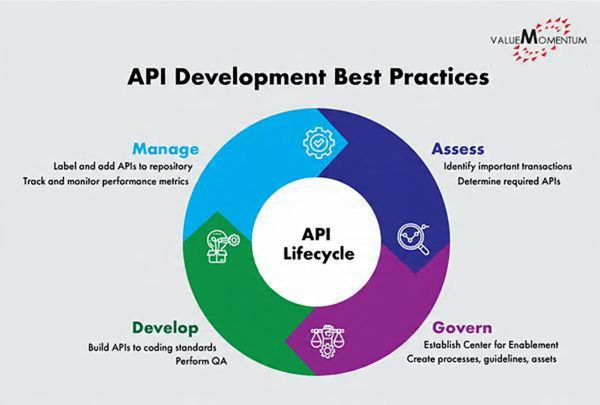
| # | API Development Guideline | Purpose / Benefit | Implementation Tips |
|---|---|---|---|
| 1 | Understand Your API Consumers | Ensures APIs are user-focused and intuitive | Identify target users, gather real use cases, design around workflows |
| 2 | Use Clear & Consistent Naming Conventions | Reduces confusion, improves readability | Use plural nouns for resources, keep URIs hierarchical and predictable |
| 3 | Follow RESTful Principles | Standardized, scalable, and maintainable APIs | Implement stateless architecture, use HTTP methods correctly (GET, POST, PUT, DELETE) |
| 4 | Version Your APIs from Day One | Prevents breaking changes | Use URL versioning (/v1/resource), header-based versioning, or query parameters |
| 5 | Design with Scalability in Mind | Handles growth without performance issues | Use caching, load balancing, efficient data models, and stateless design |
| 6 | Implement Strong Authentication & Authorization | Protects sensitive data | Use API keys, OAuth, JWT; implement role-based access control |
| 7 | Prioritize Security at Every Layer | Prevents attacks and data breaches | Use HTTPS, encrypt data, input validation, rate limiting |
| 8 | Provide Meaningful Error Handling & Responses | Makes APIs easier to debug | Use standard HTTP status codes and actionable error messages |
| 9 | Optimize API Performance | Reduces latency, improves user experience | Use pagination, filtering, compression, optimize database queries |
| 10 | Write Comprehensive API Documentation | Enhances developer adoption | Use tools like OpenAPI/Swagger, provide examples and clear instruction |
Conclusion:
API development isn’t just about making endpoints work. It’s about creating reliable, secure, and scalable communication channels that developers enjoy using. By following these 13 essential API development best practices, you set your APIs up for long-term success. Clear design, strong security, thoughtful documentation, and future-proof planning all work together to create APIs that grow with your business instead of holding it back.
FAQs
-
What is the most important API best practice?
Understanding your API consumers is the foundation of all other best practices. -
Why is API versioning necessary?
It prevents breaking changes and allows innovation without disrupting users. -
How can I improve API security?
Use HTTPS, strong authentication, rate limiting, and proper input validation. -
What makes API documentation effective?
Clarity, examples, and up-to-date information make documentation truly useful. -
How often should APIs be tested?
Continuously—especially after updates, feature additions, or performance changes.