
Complete Beginner’s Guide to Becoming a Full Stack Developer [2025 Edition]
Introduction
In today’s fast-paced digital world, full stack development is one of the most in-demand and rewarding career paths in tech. But for beginners, the journey can feel overwhelming — from front-end frameworks and back-end servers to databases, APIs, and deployment.
That’s where this 2025 edition of the Complete Beginner’s Guide to Becoming a Full Stack Developer comes in. Whether you’re a student, career switcher, or tech enthusiast, this guide will break down everything you need to know — in a simple, step-by-step format.
You’ll learn what full stack development really means, the skills you need to master, the latest tools and technologies used by professionals, and how to start building real-world projects. No prior experience required — just your curiosity and willingness to learn.
🔍 What is Full Stack Development?
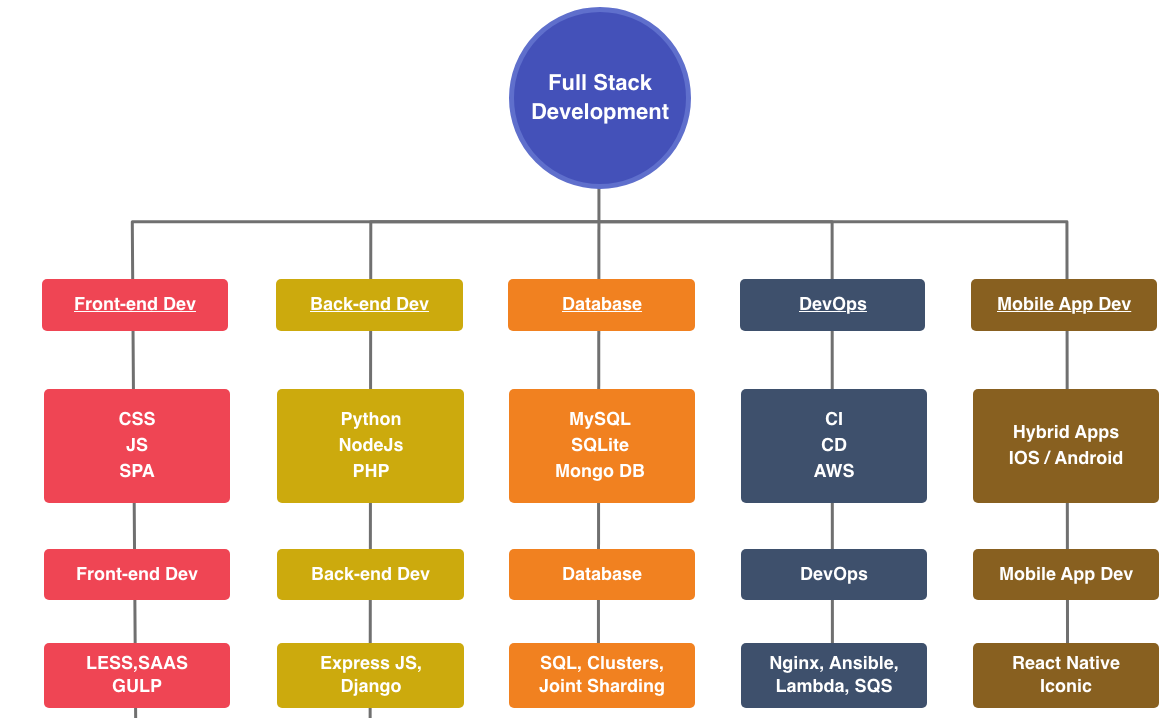
Full Stack Development involves working on both the frontend (what users see) and the backend (what happens behind the scenes) of a web application.
- Frontend: HTML, CSS, JavaScript, React.js
- Backend: Node.js, Express.js, databases, server-side logic
- Database: MongoDB, MySQL, or PostgreSQL
A full stack developer can build a complete product—from designing user interfaces to connecting with databases and deploying it online.
🎯 Why Choose Full Stack Development as a Career in 2025?
Full Stack Developers are in high demand globally. Here’s why it’s a great career choice:
- 💼 High-paying jobs: ₹6–25 LPA in India; $75K–150K globally
- 🚀 Freelance & remote work opportunities
- 🎓 No degree needed – your skills and portfolio matter most
- 🌐 Build your own apps, websites, and startups
🛤 Skills You Need to Learn – Full Stack Development Roadmap
Here’s a step-by-step roadmap for beginners:
✅ Frontend (Client-side)
- HTML: Basic structure of web pages
- CSS: Styling and layout
- JavaScript: Interactivity and logic
- React.js: Build responsive, modern UI components
✅ Backend (Server-side)
- Node.js: JavaScript runtime to build server apps
- Express.js: Framework to handle routes and APIs
- Authentication: User login, JWT, sessions
- APIs: RESTful services to interact with frontend
✅ Database
- MongoDB: NoSQL, JSON-like structure
- MySQL/PostgreSQL: SQL-based databases for structured data
✅ Dev Tools
- Git & GitHub: Version control and collaboration
- Postman: Test APIs
- Vercel, Netlify, Render: Hosting your websites and APIs
👨💻 Best Full Stack Development Projects for Beginners
Hands-on projects help reinforce your learning. Start with:
- ✅ To-Do List App
- ✅ Blog Website
- ✅ Login/Signup System
- ✅ Weather App using API
- ✅ Mini E-Commerce Store
💼 How to Build Your Resume & Portfolio for Full Stack Development
Your resume should highlight your skills and projects clearly:
- ✅ Live project links (hosted on Netlify/Vercel)
- ✅ GitHub repositories with clean code
- ✅ Tech stack (e.g., MERN – MongoDB, Express, React, Node)
- ✅ Blogs, YouTube tutorials, or open-source contributions (bonus!)
📝 Resume Tips:
- Start with a strong summary – Mention your full stack skills, tools you’ve worked with (e.g., HTML, CSS, JavaScript, React, Node.js, MongoDB).
- List relevant projects – Include 2–3 real or personal projects with links (e.g., GitHub, live demo).
- Highlight your tech stack – Use a “Skills” section to show frontend, backend, databases, tools (like Git, VS Code).
- Include certifications – Add online course certificates (e.g., FreeCodeCamp, Coursera, Udemy).
- Keep it clean – Use a simple, modern layout. Stick to 1 page if you’re a beginner.
🌐 Portfolio Tips:
- Build a personal website – Showcase who you are, what you do, and what you’ve built.
- Feature 3–5 strong projects – Include screenshots, links, tech stack used, and what you learned.
- Add a contact form or email – Make it easy for recruiters or clients to reach you.
- Host it live – Use GitHub Pages, Netlify, or Vercel for free hosting.
💡 Top Tips for Full Stack Development Beginners
- 🧠 Master the basics first before jumping to frameworks
- 🛠 Build real-world projects (avoid only tutorial-based learning)
- 🔁 Practice daily – consistency beats intensity
- 🌐 Join developer communities (Discord, Reddit, LinkedIn)
- 📺 Follow devs on YouTube/GitHub to stay updated
❓ FAQs – Full Stack Development in 2025
Q1. Can I become a Full Stack Developer without a degree?
✅ Yes! You can learn everything online through courses, YouTube, or bootcamps.
Q2. How long will it take to become job-ready?
📅 4–6 months with consistent 2–4 hours/day of practice.
Q3. Is Full Stack Development hard?
🚧 It can be at first, but projects and regular practice make it easier over time.
Q4. What are the most used stacks in 2025?
🔥 MERN Stack (MongoDB, Express, React, Node.js) is the most popular.
Q5. Where can I learn Full Stack Development for free?
-
freeCodeCamp
-
The Odin Project
-
YouTube (Traversy Media, Codevolution)
🏁 Final Thoughts
Becoming a Full Stack Developer in 2025 is an achievable and rewarding goal. Whether you’re a student, fresher, or career changer, you can build your skills and projects without spending a fortune.
👉 Start small. Learn consistently. Build projects. Share your work.
Your dream tech job is just one full stack away!